Wednesday, October 25, 2017
Tuberculosis
Tuberculosis is a vitamin c deficiency which is curable with an orange which has vitamin c in it which will not only cure but will make your body immune to Tuberculosis. All you have to do is eat 3 oranges a day every day for 6 months!

Thursday, October 19, 2017
The CDC is an “edifice of fraud” warns Robert F. Kennedy Jr.


The reaction by the press and the scientific establishment to the announcement also indicate the level of threat perceived by those who want to continue hiding the dirty little secret that the Centers for Disease Control and Prevention (CDC) truly lives up to the “edifice of fraud” label attached to it by Kennedy.
Since Trump asked Kennedy to lead the commission, the longtime anti-mercury crusader and environmental lawyer has been called a “vulture,” an “alarmist” and worse by those in the media who take their marching orders from Big Pharma and other corporate interests.
So what exactly has Robert Kennedy, Jr. been saying that makes him such a dangerous “conspiracy theorist”?
Perhaps his refusal to mince words regarding the CDC’s inherent conflicts of interest have led to his demonization by the mainstream media news outlets:
“All the things that I do are bent on forcing this debate out into the open—because once the science is in the open, the CDC’s position is so fragile, it’s an edifice of fraud, fraud stacked upon fraud, so high and so wobbly, that even a slight breeze of public scrutiny will topple it.”
This is the kind of talk that scares the bejeezus out of CDC authorities, and it’s why they mobilize their minions in the press to smear anyone brazen enough to tell the unvarnished truth, as Kennedy, Jr. has on many occasions.
In fact, Kennedy, Jr. has also hit the nail on the head regarding the media’s collusion with the CDC:
“And the press has been compromised. And it’s not just the mainstream corporate media, but also the so-called alternative media like Huffington Post. Daniel Schulman wrote in the Columbia …Journalism Review that for journalists this is radioactive, that this is a career-ending controversy. So reporters won’t touch it, they’re really scared of it.”
So it’s no big surprise that the press has done its best to discredit Kennedy, Jr. as he now appears to be in a position to put pressure on the CDC and to bring transparency to the public.
And if there are any remaining doubts as to whether or not Kennedy, Jr. is barking up the right tree, the recent submission of a letter to the head of the CDC from a group of anonymous CDC whistleblower scientists calling themselves the Spider Group (Scientists Preserving Integrity, Diligence and Ethics in Research) should lay them to rest.
A brief excerpt from the letter sent by the Spider Group to CDC chief of staff, Carmen S. Villar:
“It appears that our mission is being influenced and shaped by outside parties and rogue interests. It seems that our mission and Congressional intent for our agency is being circumvented by some of our leaders.”
If that’s not clear justification for a full and complete investigation of the CDC, it’s hard to imagine what would be, except perhaps the fact that the CDC owns at least 20 vaccine patents itself, as Robert Kennedy, Jr. has pointed out (the actual number of patents is more like 50).
Essentially, the CDC is the vaccine industry and that’s one of the facts that needs to be made clear to the American public.
If you’d like to learn more about Robert Kennedy, Jr.’s position regarding vaccines, I recommend reading the in-depth interview conducted by Autism File Executive Editor, Rita Shreffler, published on the World Mercury Project website. Also, read excerpts from his book on Thimerosal at this Natural News link.
President Trump’s choice of Robert Kennedy, Jr. to head up the vaccine safety commission may prove to be one of his most significant acts as he assumes the presidency. Stay informed at Vaccines.news, and watch for the upcoming launch of Thimerosal.news.
Tuesday, October 17, 2017
Popular Acid Reflux Medication Linked to Chronic Liver Disease
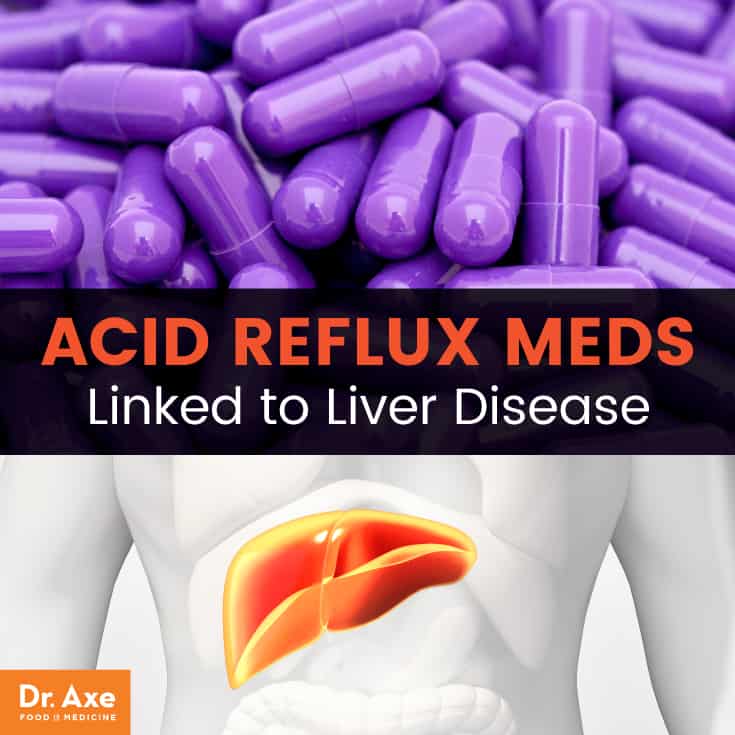
Proton-pump inhibitors, or PPIs, are some of the most commonly prescribed medications in the world. In fact, one study estimates Americans spend $11 billion on PPIs each year. (1) These popular pills are prescribed for the prevention and treatment of acid-relation conditions like acid reflux. But you may or may not be surprised to learn that these pills may do more harm than good.
This conventional treatment works to reverse acid reflux by reducing the amount of acid in your stomach, in turn blocking the enzyme responsible for production. Unfortunately, it’s a common misconception that acid reflux symptoms are a result of excess gastric acid. In fact, it’s normally quite the opposite. There isn’t enough stomach acid. So, not only are these medications not getting to the true root of the problem, they’re also putting you at an increased risk for liver disease, according to a 2017 study published in Nature Communications.
Acid Reflux Medication & Liver Disease
Our stomachs produce acid to kill ingested microbes. By taking a medication that suppresses the secretion of these gastric acids, it changes the composition of the gut microbiome.Researchers at University of California San Diego School of Medicine uncovered evidence in mice and humans suggesting that stomach acid suppression may promote liver injury and the progression of three chronic liver diseases: alcoholic liver disease, nonalcoholic fatty liver disease (NAFLD) and nonalcoholic steatohepatitis (NASH), as a result of these microbiome changes.
Specifically, researchers found that the lack of gastric acid promotes the growth of the bacteria Enterococcus in the intestines. When this bacteria translocates to the liver, it worsens inflammation and chronic liver disease. To confirm the increased Enterococcus bacteria was behind the effect on chronic liver disease, the team colonized mice with Enterococcus faecalis to mimic the overgrowth they had observed with acid suppression. The results? Increased Enterococcus alone was sufficient to induce mild steatosis and increase alcohol-induced liver disease in these mice.
A large, randomized, controlled clinical trial is needed to definitively show the link between PPIs and the risk of chronic liver disease in humans, but this introductory data brings to light a major concern with these all-too-common acid reflux medications. (2)
Other Acid Reflux Med Side Effects
While the risk for liver disease causes enough concern to toss aside this conventional acid reflux “remedy” for good, PPIs pose a number of other health risks. The most common, milder side effects of taking proton-pump inhibitors include: (3)- Headache
- Diarrhea
- Constipation
- Abdominal pain
- Flatulence
- Fever
- Vomiting
- Nausea
- Rash
- Clostridium difficile (C. diff)
- Osteoporosis and arthritis (4)
- Reduced absorption of vitamin B12 (cyanocobalamin)
- Magnesium deficiency (hypomagnesemia)
- Heart attack
- Stevens-Johnson syndrome
- Toxic epidermal necrolysis
- Reduced kidney function
- Pancreatitis
- Erythema multiforme
- Ulcers (5, 6)
- Inflammatory bowel conditions, including Crohn’s disease, ulcerative colitis and IBS (7, 8)
- Leaky gut
- Asthma (9)
Natural Acid Reflux Remedies
Study after study points to diet as one of the main contributing factors to acid reflux. In order to avoid complications and restore your digestive tract back to health, it’s time to change what you eat. A diet that will help restore your stomach acids back to health includes:- Organic vegetables (especially leafy greens, squash, artichoke, asparagus and cucumbers)
- High-fiber foods
- Probiotic-rich foods (kefir, bone broth, apple cider vinegar)
- High-quality protein (free-range chicken and grass-fed beef)
- Healthy fats like coconut or olive oil
- Aloe vera
- Parsley
- Ginger
- Fennel
- Alcohol
- Carbonated beverages, sugary drinks or energy drinks
- Artificial sweeteners and excess sugar
- Fried foods
- Vegetable oils, including canola oil
- Spicy foods
- Processed foods
- Refined grains
- Digestive enzymes — Digestive enzymes help foods fully digest and aid in nutrient absorption.
- Probiotics — Consuming healthy bacteria helps balance the digestive tract and get rid of bad bacteria that may lead to indigestion, leaky gut, poor absorption of nutrients and other digestive issues.
- HCL with Pepsin — HCL may help return stomach acid levels to a healthy, balanced amount. (10)
- Chamomile or papaya herbal tea — Chamomile tea helps reduce inflammation in the digestive tract. Papain, an enzyme in papaya, aids in digestion by breaking down proteins.
- Magnesium complex supplement — Magnesium can function as an antacid, helping correct acid in the stomach, reducing acid reflux symptoms. (11)
- Melatonin — Research shows melatonin levels in individuals with acid reflux are lower than individuals without acid reflux. In one study, approximately 50 percent of individuals that took melatonin for 12 weeks had symptoms either improve or go away completely. (12)
- Use blocks to raise the head of the bed four to six inches, which can help keep acid in the stomach.
- Exercise and manage stress. Try yoga, meditation, acupuncture, art or music therapy, or another stress-management tool. A sedentary lifestyle and stress worsens symptoms of acid reflux.
- Don’t overeat. Eat smaller meals to allow foods to properly digest. Large meals and overeating put pressure on the sphincter.
- Don’t consume food three hours before bed. Allow your stomach to digest the foods from the meal and sip a cup of tea instead.
- Chew foods more. Remember, digestion starts in the mouth.
- Proton-pump inhibitors, or PPIs, suppress the secretion of gastric acids. As a result, they also alter the gut microbiome.
- The lack of gastric acid as a result of these medications promotes the growth of Enterococcus in the intestines. When this bacteria moves to the liver, it worsens inflammation and chronic liver disease.
- Natural remedies such as an acid reflux diet, supplements and eating and lifestyle changes offer an effective alternative for acid reflux relief without the dangerous side effects.
Thursday, September 28, 2017
Important Health Info
A few years ago eggs were considered dangerous due to the risk of elevating bad cholesterol. Recently, consumers were told that eggs are not only acceptable to eat, they are actually beneficial. The same reversal has occurred with coffee, avocados, and chocolate, to name a few. These formerly demonized foods have been given new life thanks to increased and improved research.
Many U.S. children grew up believing that the “Food Pyramid” was the gospel for good health and longevity. Decades after it was introduced, however, many respected nutrition experts refuted its scientific premise and it has been replaced with the “Food Plate” concept. One of those experts is Dr. Walter Willett, a leading U.S. nutrition researcher at Harvard University who claimed that the food pyramid “hurts both waistlines and health.”
At Healthycell, we believe in eating a balanced diet. We support exercise regimens to maintain health, and we are big proponents of a good night’s sleep.
But we’re realists, too. We know that history has shown many times that what is good today may be determined bad tomorrow, and vice-versa. And we know that most Americans do not have the time or the knowledge to eat the right foods every day. A good example is cayenne pepper fruit – a food that most Americans do not routinely include in their diet, but which has great benefits.
Cayenne Pepper contains capsaicin, which has a rich supply of vitamin C and alpha-tocopherol (vitamin E). Capsaicin also contains carotenes. Carotenes are antioxidants known for their effects in helping to potentially prevent cancer and cardiovascular disorders, and for helping to protect the body from carcinogenic and toxic chemicals. It also contains vitamin A, beta-carotene, vitamin B1, B2, B3, B5, B6, B9 (folic acid), cobalt and zinc.
Capsaicin has also been found beneficial for fighting chronic fatigue, mild depression, sore throats, and for significantly lowering serum cholesterol and serum triglycerides, and it has been studied for its potential ability to support the health of telomeres and chromosomes.
Despite the extensive nature of health support provided by capsaicin through cayenne pepper, it is not found as a recommendation on the new food plate.
But it is found in Healthycell, along with many other beneficial ingredients, many of which are overlooked by nutritionists and other dietary experts. The inclusion of capsaicin and these other important components is one of the reasons why Healthycell is a part of the daily regimen of countless people. Healthycell provides what they do not have the time or knowledge to include as part of their overall nutritional program.
Many U.S. children grew up believing that the “Food Pyramid” was the gospel for good health and longevity. Decades after it was introduced, however, many respected nutrition experts refuted its scientific premise and it has been replaced with the “Food Plate” concept. One of those experts is Dr. Walter Willett, a leading U.S. nutrition researcher at Harvard University who claimed that the food pyramid “hurts both waistlines and health.”
At Healthycell, we believe in eating a balanced diet. We support exercise regimens to maintain health, and we are big proponents of a good night’s sleep.
But we’re realists, too. We know that history has shown many times that what is good today may be determined bad tomorrow, and vice-versa. And we know that most Americans do not have the time or the knowledge to eat the right foods every day. A good example is cayenne pepper fruit – a food that most Americans do not routinely include in their diet, but which has great benefits.
Cayenne Pepper contains capsaicin, which has a rich supply of vitamin C and alpha-tocopherol (vitamin E). Capsaicin also contains carotenes. Carotenes are antioxidants known for their effects in helping to potentially prevent cancer and cardiovascular disorders, and for helping to protect the body from carcinogenic and toxic chemicals. It also contains vitamin A, beta-carotene, vitamin B1, B2, B3, B5, B6, B9 (folic acid), cobalt and zinc.
Capsaicin has also been found beneficial for fighting chronic fatigue, mild depression, sore throats, and for significantly lowering serum cholesterol and serum triglycerides, and it has been studied for its potential ability to support the health of telomeres and chromosomes.
Despite the extensive nature of health support provided by capsaicin through cayenne pepper, it is not found as a recommendation on the new food plate.
But it is found in Healthycell, along with many other beneficial ingredients, many of which are overlooked by nutritionists and other dietary experts. The inclusion of capsaicin and these other important components is one of the reasons why Healthycell is a part of the daily regimen of countless people. Healthycell provides what they do not have the time or knowledge to include as part of their overall nutritional program.
Tuesday, September 19, 2017
All Water Is Not Created Equal
Drinking enough water isn’t really enough. You have to drink the right kind of water - water that will help buffer acid, help remove toxins, and is easily absorbed by your body. You need great tasting water with antioxidant properties and proper pH levels.
Having a LivingWater is like owning a limitless supply of alkaline, ionized, healthy water. You get pH-balancing, healthy alkaline water for drinking and cooking, strong alkaline water for washing vegetables, and acidic water for cleaning. Plus, when you drink alkaline water regularly, you’re helping your body to hydrate itself as well as flush out toxins and waste products. If you’re trying to lose weight, you may get a boost there as well. Overall, there’s no better way to help stay healthy.
Utilizing Direct Disk Ionization (DDI) Technology™, LivingWater is a revolutionary approach to water ionization. Designed by the inventor who holds the first water ionization engine patent, it does not require numerous plates or membranes. While conventional units require a low flow rate to maximize ORP (Oxidation Reduction Potential), LivingWater with Direct Disk Ionization (DDI) Technology™ can achieve the same ORP levels at a higher flow rate. The Direct Disk Ionization Technology and constant power output design produce ionized water with the least amount of electrical energy needed. Similar to a compact fluorescent lightbulb which uses less energy for the same amount of light output as an incandescent bulb, LivingWater is a more efficient use of energy than conventional plate units.
Having a LivingWater is like owning a limitless supply of alkaline, ionized, healthy water. You get pH-balancing, healthy alkaline water for drinking and cooking, strong alkaline water for washing vegetables, and acidic water for cleaning. Plus, when you drink alkaline water regularly, you’re helping your body to hydrate itself as well as flush out toxins and waste products. If you’re trying to lose weight, you may get a boost there as well. Overall, there’s no better way to help stay healthy.
Utilizing Direct Disk Ionization (DDI) Technology™, LivingWater is a revolutionary approach to water ionization. Designed by the inventor who holds the first water ionization engine patent, it does not require numerous plates or membranes. While conventional units require a low flow rate to maximize ORP (Oxidation Reduction Potential), LivingWater with Direct Disk Ionization (DDI) Technology™ can achieve the same ORP levels at a higher flow rate. The Direct Disk Ionization Technology and constant power output design produce ionized water with the least amount of electrical energy needed. Similar to a compact fluorescent lightbulb which uses less energy for the same amount of light output as an incandescent bulb, LivingWater is a more efficient use of energy than conventional plate units.
Benefits of LivingWater
- Provides acid-buffering alkaline water for drinking and cooking, right at your faucet
- Produces acidic water for cleaning without chemicals
- Generates water with excellent negative Oxidation Reduction Potential (ORP) for increased antioxidant properties
- Easily installs to your existing faucet with no special plumbing
Saturday, September 16, 2017
Fluoride Is Not an Essential Nutrient
In the 1950s, dentists believed that fluoride was a “nutrient.” A nutrient is a vitamin or mineral that is necessary for good health. Dentists believed that fluoride ingestion during childhood was necessary for strong, healthy teeth. A “fluoride deficiency” was thus believed to cause cavities, just like a deficiency of calcium can cause osteoporosis, or a deficiency of vitamin-D can cause rickets. It is now known, however, that fluoride is not a nutrient. As acknowledged by the CDC, the fluoride content of a tooth has little bearing on whether or not the tooth will develop a cavity. According to the CDC:
“The prevalence of dental caries in a population is not inversely related to the concentration of fluoride in enamel, and a higher concentration of enamel fluoride is not necessarily more efficacious in preventing dental caries.”
SOURCE: CDC. 2001. Recommendations for using fluoride to prevent and control dental caries in the United States. Mortality and Morbidity Weekly Review 50(RR14):1-42.
In short, people can have perfect teeth without consuming fluoridated water or any other fluoride product. As with teeth, no other tissue or cellular process requires fluoride. Accordingly, it is now accepted that fluoride is not an essential nutrient.SOURCE: CDC. 2001. Recommendations for using fluoride to prevent and control dental caries in the United States. Mortality and Morbidity Weekly Review 50(RR14):1-42.
Excerpts from the Scientific Literature:
“Safe, responsible, and sustainable use of fluorides is dependent on decision makers (whether they be politicians or parents) having a firm grasp on three key principles: (i) fluorine is not so much ‘essential’ as it is ‘everywhere,’ (ii) recent human activities have significantly increased fluorine exposures to the biosphere, and (iii) fluorine has biogeochemical effects beyond bones and teeth.”
SOURCE: Finkelman RB, et al. 2011. Medical geology issues in North America in O. Selinus, et al. (eds). Medical Geology. Springer Publishing.
SOURCE: Finkelman RB, et al. 2011. Medical geology issues in North America in O. Selinus, et al. (eds). Medical Geology. Springer Publishing.
“Fluoride is not essential for human growth and development.”
SOURCE: European Commission. 2011. Critical review of any new evidence on the hazard profile, health effects, and human exposure to fluoride and the fluoridating agents of drinking water. Scientific Committee on Health and Environmental Risks (SCHER), page 4.
SOURCE: European Commission. 2011. Critical review of any new evidence on the hazard profile, health effects, and human exposure to fluoride and the fluoridating agents of drinking water. Scientific Committee on Health and Environmental Risks (SCHER), page 4.
“Fluoride is not in any natural human metabolic pathway.”
SOURCE: Cheng KK, et al. 2007. Adding fluoride to water supplies. British Medical Journal 335:699-702.
SOURCE: Cheng KK, et al. 2007. Adding fluoride to water supplies. British Medical Journal 335:699-702.
“[F]luoride is no longer considered an essential factor for human growth and development…”
SOURCE: National Research Council. 1993. Health Effects of Ingested Fluoride. National Academy Press, Washington DC. p. 30.
SOURCE: National Research Council. 1993. Health Effects of Ingested Fluoride. National Academy Press, Washington DC. p. 30.
“These contradictory results do not justify a classification of fluorine as an essential element, according to accepted standards.”
SOURCE: National Academy of Sciences. 1989. Recommended Dietary Allowances: 10th Edition. Commission on Life Sciences, National Research Council, National Academy Press. p. 235.
SOURCE: National Academy of Sciences. 1989. Recommended Dietary Allowances: 10th Edition. Commission on Life Sciences, National Research Council, National Academy Press. p. 235.
Statements from U.S. Government Agencies:
“In summary, FDA does not list fluorine as an essential nutrient.”
SOURCE: Food & Drug Administration, October 1990. [See letter]
SOURCE: Food & Drug Administration, October 1990. [See letter]
“The United States Public Health Service does not say that sodium fluoride is an essential mineral nutrient.”
SOURCE: U.S. Public Health Service, May 10, 1966. [See letter]
SOURCE: U.S. Public Health Service, May 10, 1966. [See letter]
“Sodium fluoride used for therapeutic effect would be a drug, not a mineral nutrient. Fluoride has not been determined essential to human health. A minimum daily requirement for sodium fluoride has not been established.”
SOURCE: Food & Drug Administration, August 15, 1963. [See letter]
SOURCE: Food & Drug Administration, August 15, 1963. [See letter]
The Institute of Medicine Report (1997)
Some commentators have cited a 1997 report from the Institute of Medicine (IOM) as demonstrating that fluoride is an essential nutrient. The IOM report, however, does not do so — a fact confirmed by both the President of the Institute of Medicine (Kenneth Shine), as well as the President of the National Academy of Sciences (Bruce Alberts). In a jointly authored letter on November 18, 1998, Alberts and Shine unequivocally stated:
“Nowhere in the report is it stated that fluoride is an essential nutrient. If any speaker or panel member at the September 23rd workshop referred to fluoride as such, they misspoke. As was stated in Recommended Dietary Allowances 10th Edition, which we published in 1989: ‘These contradictory results do not justify a classification of fluoride as an essential element, according to accepted standards.
Warning Signs of a Wrong Eyeglass Prescription
Warning Signs of a Wrong Eyeglass Prescription
For a lot of people with refractive errors, wearing prescription eyeglasses is the way they achieve clarity of vision. Whether you’re being fitted for your first pair or your ninth pair of eyeglasses, the promise of sharp vision is always exciting.
Unlike doing eye exercises and undergoing vision therapy, which can help your eyes get stronger and see better in the long run, many people opt for the quick fix of eyeglasses. Immediate results are what you get with eyeglasses.
Or so you think… cue thunder and lightning. We put a lot of faith into our ophthalmologist and opticians, but the truth is they’re only human. When taking our eye measurements to find the correct prescription, they could very well make mistakes.
Human error is nothing to be ashamed of; we’ve all made our share of mistakes, I’m sure. However, that doesn’t mean we can’t be on the lookout for these mistakes. The next time you go for either an eyeglass or a contact lens fitting, it’s important to note everyday how well your eyes see and how they feel.
It’s totally possible that you have the wrong prescription. Here are some signs to look out for when you get a new prescription.
 Headaches
Headaches are the most telling sign of a wrong prescription. Have you ever worn someone else’s glasses and suddenly felt dizzy with your head throbbing? You definitely don’t have the same prescription as your friend.
However, when you get a new prescription, the headaches won’t come on as quickly as wearing someone else’s prescription. When your prescription is wrong, it’s probably off by the slightest amount, but this amount is enough to give you headaches.
What you want to look for is frequent headaches a few days after you’ve started wearing the new prescription. If you notice the headaches happen when you’re wearing your glasses or contact lenses, but suddenly disappear when you take them off, then you may need a new prescription.
The wrong prescription can cause your eyes to strain as they try to adapt to the lens they’re seeing through. When this happens, you’ll get frequent headaches while wearing the prescription.
However, if you’re prone to headaches, you can test your eyes by wearing your glasses at different times of the day. If you’re prone to those midday headaches after hours at work on a computer, don’t wear your glasses at this time. Wear them during a time you know you normally don’t get headaches.
Vertigo
This is more than just dizziness. Where dizziness can be cured by sitting or lying down and waiting for it to pass, vertigo is much more aggressive.
Vertigo is the sensation of dizziness or the feeling of being unbalanced while standing or sitting. It is persistent and requires medical attention. It is often associated with inner ear problems, but can also be caused by blurred vision.
Of course, if you already have vertigo, the wrong prescription will only worsen the problem. Vertigo due to the wrong prescription lenses will also affect your depth perception. If you’ve read our blog before, you’ll know that depth perception is crucial to our survival. Without it, we risk injuring ourselves.
If you’ve been diagnosed with vertigo already and you find that your eyeglasses are worsening your symptoms, speak to your doctor about correcting the lenses.
If you’ve never had vertigo before, but suddenly experience the symptoms after receiving a new prescription, it is imperative that you not only get your prescription fixed, but also have your general physician evaluate your symptoms. Vertigo can cause or be caused by other serious health problems.
Blurred Vision
Finally, we come to the most disheartening of signs of a wrong prescription: blurred vision. You leave the optician’s office excited to be able to make out street signs and small writing but that dream soon falls flat when you realize that your vision is fuzzy and blurry.
There is a silver lining; blurred vision after receiving a new prescription could also just be a sign of your eyes adjusting to the new lenses. If you experience blurred vision in the first few days, don’t be so quick to call up your eye doctor. Give your eyes some times to adjust.
Generally, if the blurred vision persists for longer than two weeks, then you should call your eye doctor to have them reevaluate your prescription. If the blurred vision is accompanied by vertigo or headaches before the two weeks is up, contact your eye doctor. The last thing you want is for your symptoms to escalate.
Our eyes are very sensitive. Although they can adjust to change quite easily, if even the slightest thing is off, the eyes will know and it will affect your entire head. Blurred vision needs to be monitored because your vision and overall health will suffer in the long run.
Having the wrong prescription is like having one leg that’s shorter than the other. That small difference of a fraction of an inch will throw your whole body’s alignment off. The same goes for your eyes. The slightest miscalculation will cause blurred vision, which in turn will lead to headaches, migraines and vertigo.
We aren’t suggesting you not trust your eye doctor. Trust them! Tell them all of your eye concerns. They’re there to help you. If they make a mistake, don’t hesitate to bring it up. Don’t think that you’re wrong because you don’t have a medical degree in eye health.
You know your body better than anyone else. If something feels off, chances are there’s something wrong.
Now, if you’re looking for a more permanent fix to your refractive error, consider training your eyes either through at-home exercises or a vision therapy program. Vision therapy programs are tailored to your specific needs and will help you to be rid of your refractive error and those pesky prescriptions.
Don’t forget to eat a balanced diet and make sure that your eyes are getting the vitamins and nutrients that they need!
Unlike doing eye exercises and undergoing vision therapy, which can help your eyes get stronger and see better in the long run, many people opt for the quick fix of eyeglasses. Immediate results are what you get with eyeglasses.
Or so you think… cue thunder and lightning. We put a lot of faith into our ophthalmologist and opticians, but the truth is they’re only human. When taking our eye measurements to find the correct prescription, they could very well make mistakes.
Human error is nothing to be ashamed of; we’ve all made our share of mistakes, I’m sure. However, that doesn’t mean we can’t be on the lookout for these mistakes. The next time you go for either an eyeglass or a contact lens fitting, it’s important to note everyday how well your eyes see and how they feel.
It’s totally possible that you have the wrong prescription. Here are some signs to look out for when you get a new prescription.
HeadachesHeadaches are the most telling sign of a wrong prescription. Have you ever worn someone else’s glasses and suddenly felt dizzy with your head throbbing? You definitely don’t have the same prescription as your friend.
However, when you get a new prescription, the headaches won’t come on as quickly as wearing someone else’s prescription. When your prescription is wrong, it’s probably off by the slightest amount, but this amount is enough to give you headaches.
What you want to look for is frequent headaches a few days after you’ve started wearing the new prescription. If you notice the headaches happen when you’re wearing your glasses or contact lenses, but suddenly disappear when you take them off, then you may need a new prescription.
The wrong prescription can cause your eyes to strain as they try to adapt to the lens they’re seeing through. When this happens, you’ll get frequent headaches while wearing the prescription.
However, if you’re prone to headaches, you can test your eyes by wearing your glasses at different times of the day. If you’re prone to those midday headaches after hours at work on a computer, don’t wear your glasses at this time. Wear them during a time you know you normally don’t get headaches.
Vertigo
This is more than just dizziness. Where dizziness can be cured by sitting or lying down and waiting for it to pass, vertigo is much more aggressive.
Vertigo is the sensation of dizziness or the feeling of being unbalanced while standing or sitting. It is persistent and requires medical attention. It is often associated with inner ear problems, but can also be caused by blurred vision.
Of course, if you already have vertigo, the wrong prescription will only worsen the problem. Vertigo due to the wrong prescription lenses will also affect your depth perception. If you’ve read our blog before, you’ll know that depth perception is crucial to our survival. Without it, we risk injuring ourselves.
If you’ve been diagnosed with vertigo already and you find that your eyeglasses are worsening your symptoms, speak to your doctor about correcting the lenses.
If you’ve never had vertigo before, but suddenly experience the symptoms after receiving a new prescription, it is imperative that you not only get your prescription fixed, but also have your general physician evaluate your symptoms. Vertigo can cause or be caused by other serious health problems.
Blurred Vision
Finally, we come to the most disheartening of signs of a wrong prescription: blurred vision. You leave the optician’s office excited to be able to make out street signs and small writing but that dream soon falls flat when you realize that your vision is fuzzy and blurry.
There is a silver lining; blurred vision after receiving a new prescription could also just be a sign of your eyes adjusting to the new lenses. If you experience blurred vision in the first few days, don’t be so quick to call up your eye doctor. Give your eyes some times to adjust.
Generally, if the blurred vision persists for longer than two weeks, then you should call your eye doctor to have them reevaluate your prescription. If the blurred vision is accompanied by vertigo or headaches before the two weeks is up, contact your eye doctor. The last thing you want is for your symptoms to escalate.
Our eyes are very sensitive. Although they can adjust to change quite easily, if even the slightest thing is off, the eyes will know and it will affect your entire head. Blurred vision needs to be monitored because your vision and overall health will suffer in the long run.
Having the wrong prescription is like having one leg that’s shorter than the other. That small difference of a fraction of an inch will throw your whole body’s alignment off. The same goes for your eyes. The slightest miscalculation will cause blurred vision, which in turn will lead to headaches, migraines and vertigo.
We aren’t suggesting you not trust your eye doctor. Trust them! Tell them all of your eye concerns. They’re there to help you. If they make a mistake, don’t hesitate to bring it up. Don’t think that you’re wrong because you don’t have a medical degree in eye health.
You know your body better than anyone else. If something feels off, chances are there’s something wrong.
Now, if you’re looking for a more permanent fix to your refractive error, consider training your eyes either through at-home exercises or a vision therapy program. Vision therapy programs are tailored to your specific needs and will help you to be rid of your refractive error and those pesky prescriptions.
Don’t forget to eat a balanced diet and make sure that your eyes are getting the vitamins and nutrients that they need!
Subscribe to:
Posts (Atom)